Author: marileecole

Cheeky Dog Obedience featured image showing a happy Golden Retriever running toward its owner with the text "Recall – Make Coming Back the Best Part!" promoting positive reinforcement dog recall training.

Tips for a Good Recall or Coming Back When Called.

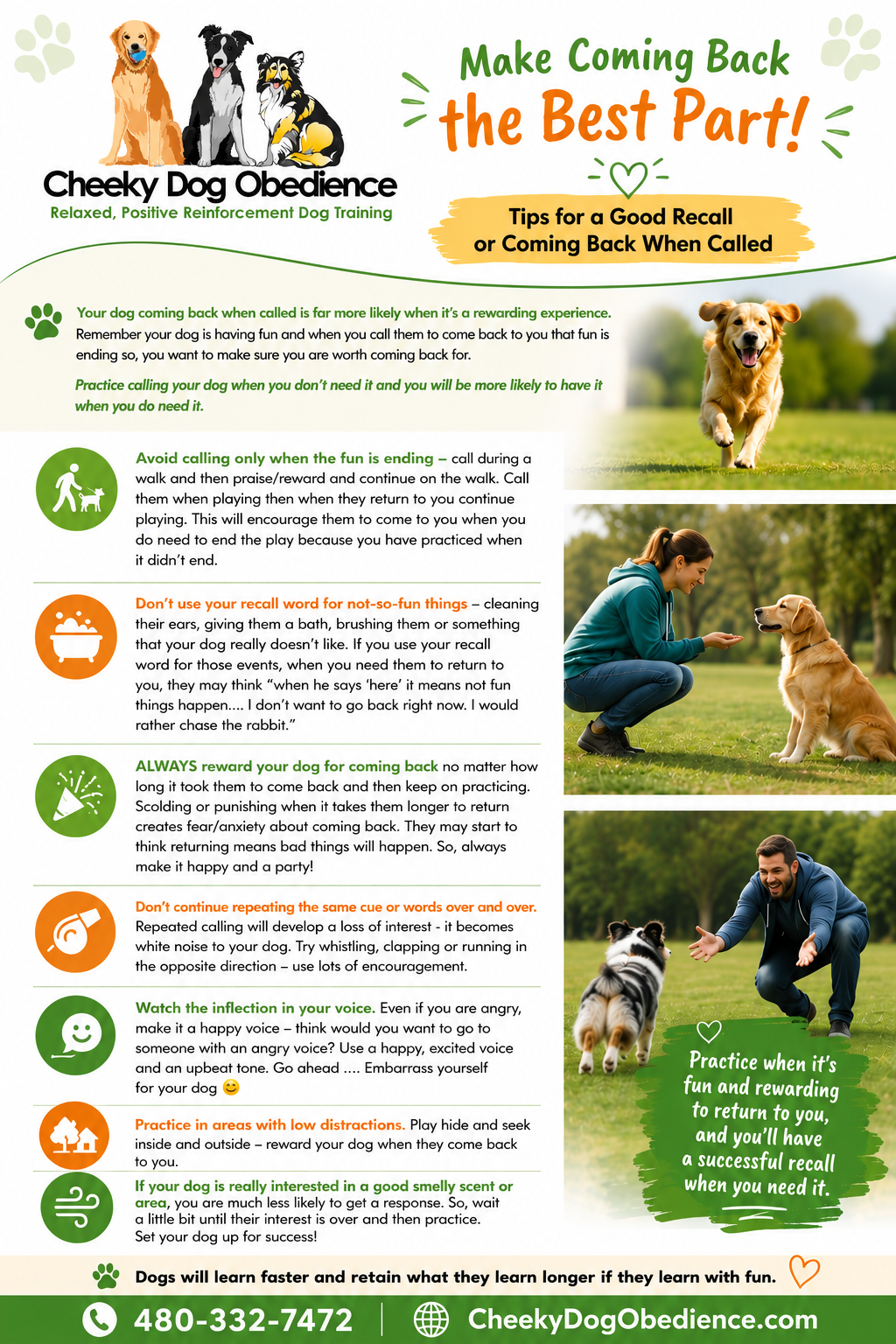
Cheeky Dog Obedience infographic with positive reinforcement recall training tips, showing dogs responding to their owners and advice for teaching dogs to come when called.

Tips for a Good Recall or Coming Back When Called.
Your dog coming back when called is far more likely when it’s a rewarding experience. Remember your dog is having fun and when you call them to come back to you that fun is ending so, you want to make sure you are worth coming back for.
Practice calling your dog when you don’t need it and you will be more likely to have it when you do need it.
Avoid calling only when the fun is ending – call during a walk and then praise/reward and continue on the walk. Call them when playing then when they return to you continue playing. This will encourage them to come to you when you do need to end the play because you have practiced when it didn’t end.
Don’t use your recall word when wanting to do something that your dog may not find fun – cleaning their ears, giving them a bath, brushing them or something that your dog really doesn’t like. If you use your recall word for those events, when you need them to return to you, they may think “when he says ‘here” it means not fun things happen …. I don’t want to go back right now. I would rather chase the rabbit.”
ALWAYS reward your dogs for coming back no matter how long it took them to come back and then keep on practicing. Scolding or punishing when it takes them longer to return creates fear/anxiety about coming back. They may start to think returning means bad things will happen. So, always make it happy and a party!
Don’t continue repeating the same cue or words over and over. Repeated calling will develop a loss of interest - it becomes white noise to your dog. Try whistling, clapping or running in the opposite direction – use lots of encouragement.
Watch the inflection in your voice. Even if you are angry, make it a happy voice – think would you want to go to someone with an angry voice? Use a happy, excited voice and an upbeat tone. Go ahead …. Embarrass yourself for your dog 😊
Practice in areas with low distractions. Play hide and seek inside and outside – reward your dog when come back to you.
If your dog is really interested in a good smelly scent or area, you are much less likely to get a response. So, wait a little bit until their interest is over and then practice. Set your dog up for success!
If you practice when it’s fun and rewarding to return to you, you will be much more likely to have a successful recall when you need it.
Dogs will learn faster and retain what they learn longer if they learn with fun.

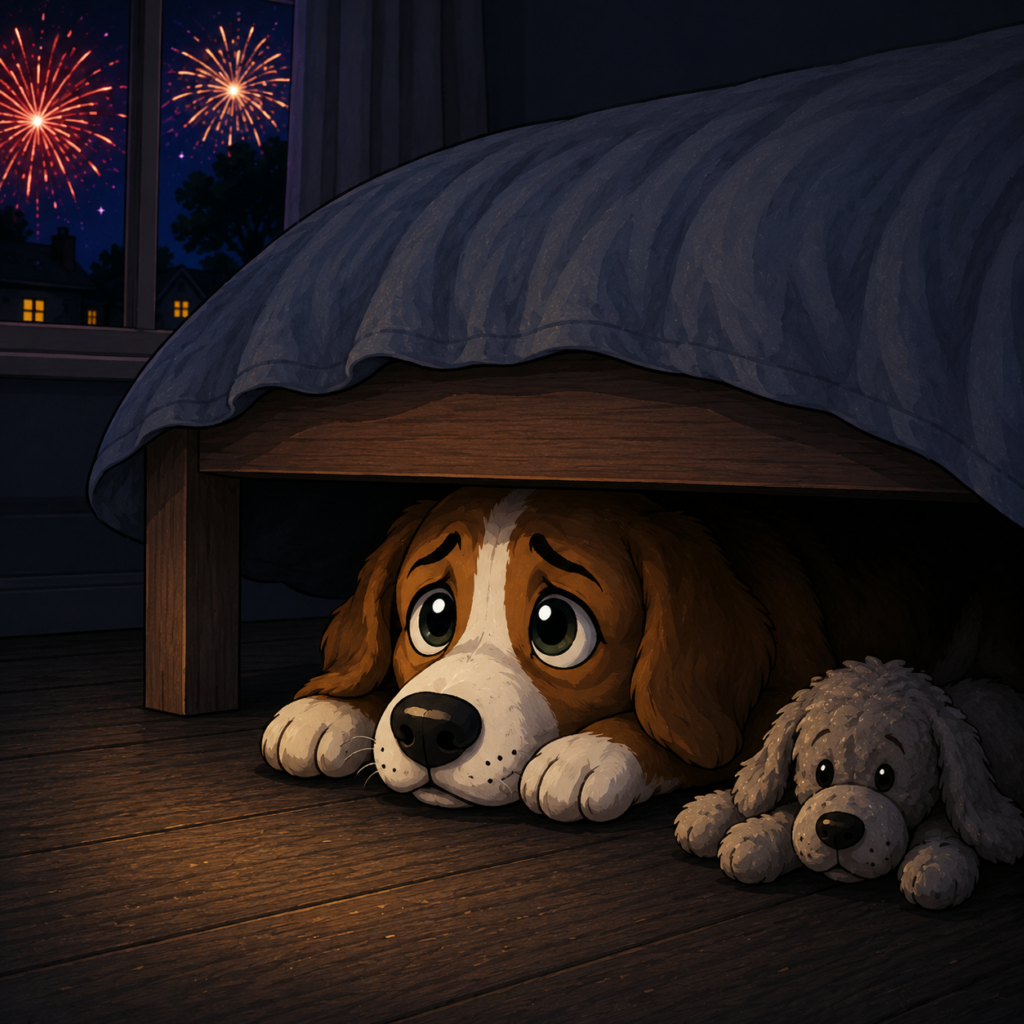
Scared dog hiding under a bed during fireworks while bright explosions light up the night outside the window.

Keep pets safe this Independence Day

Scared dog hiding under a bed during fireworks while bright explosions light up the night outside the window.


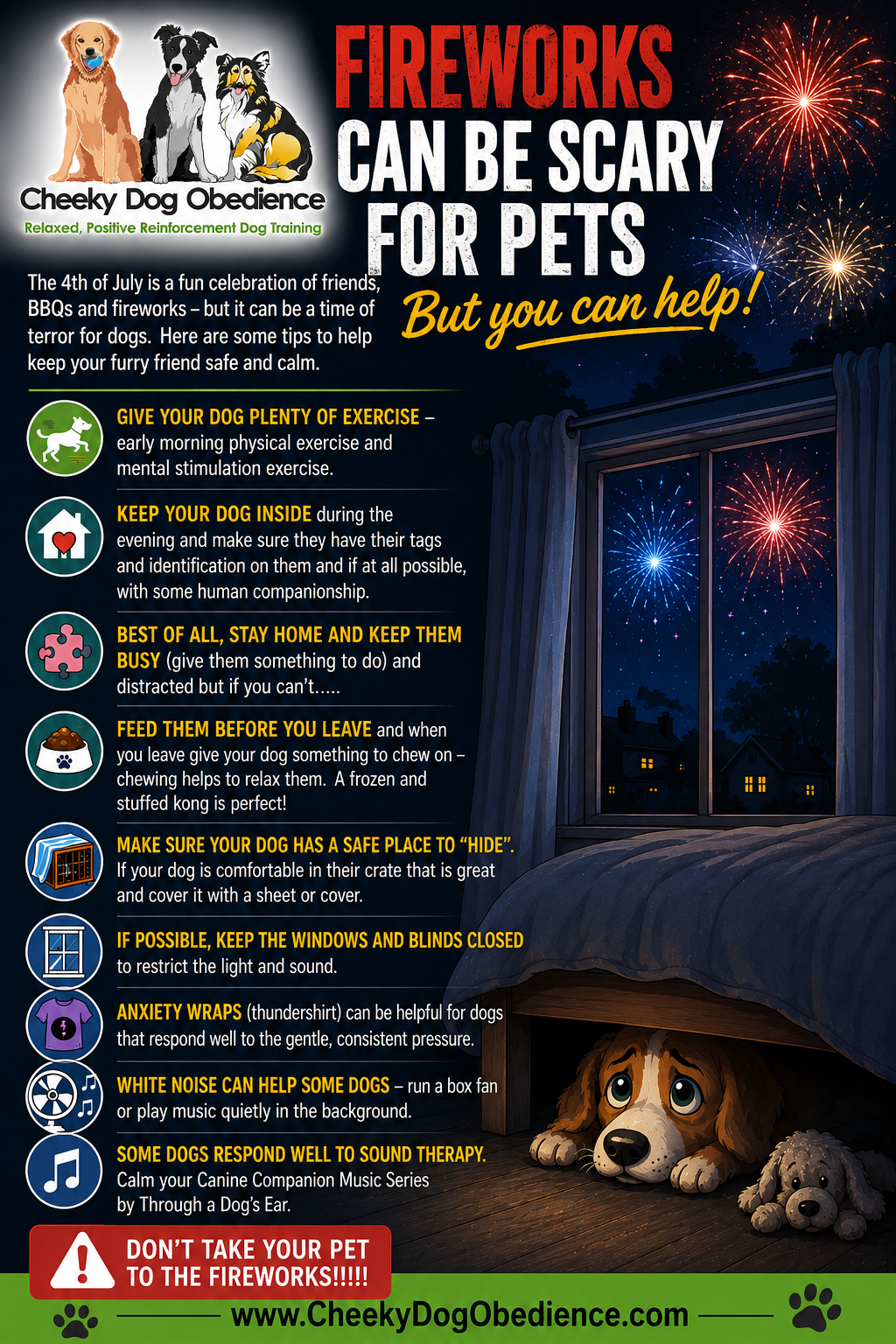
🎆 Fireworks Can Be Scary for Pets — But You Can Help!

The 4th of July is a fun celebration of friends, BBQs, and fireworks—but it can also be a time of terror for dogs. Here are some tips to help keep your furry friend safe and calm.

🐾 Tips to Help Your Dog During Fireworks

Give your dog plenty of exercise

Start the day with early morning physical exercise and mental stimulation to help reduce excess energy before the evening festivities.

Keep your dog inside

During the evening, keep your dog indoors and make sure they are wearing identification tags. If possible, provide them with human companionship so they don't have to face the noise alone.

Stay home and keep them busy

Whenever possible, stay home with your dog. Give them something enjoyable to do so they remain occupied and distracted from the fireworks.

Feed them before you leave

If you must leave, feed your dog beforehand and provide a long-lasting chew such as a frozen, stuffed Kong® toy to help them relax.

Provide a safe hiding place

Many dogs naturally seek a quiet place to hide. If your dog is comfortable in a crate, cover it with a blanket or sheet to create a cozy den where they can feel secure.

Close windows and blinds

Closing windows, curtains, and blinds helps reduce both the flashing lights and the loud sounds from fireworks outside.

Consider an anxiety wrap

Anxiety wraps (such as a ThunderShirt®) can be helpful for dogs that respond well to gentle, consistent pressure.

Use calming background noise

White noise, a box fan, or quiet music can help mask the sounds of fireworks and create a more relaxing environment.

Sound therapy may help

Some dogs respond well to specially designed calming music, such as the Calm Your Canine Companion Music Series by Through a Dog's Ear.


⚠️ Don't Take Your Pet to the Fireworks!
Even confident dogs can become frightened by loud explosions, bright flashes, unfamiliar crowds, and unexpected noises. The safest place for your pet during fireworks is at home in a calm, familiar environment.