
Nose Work Classes
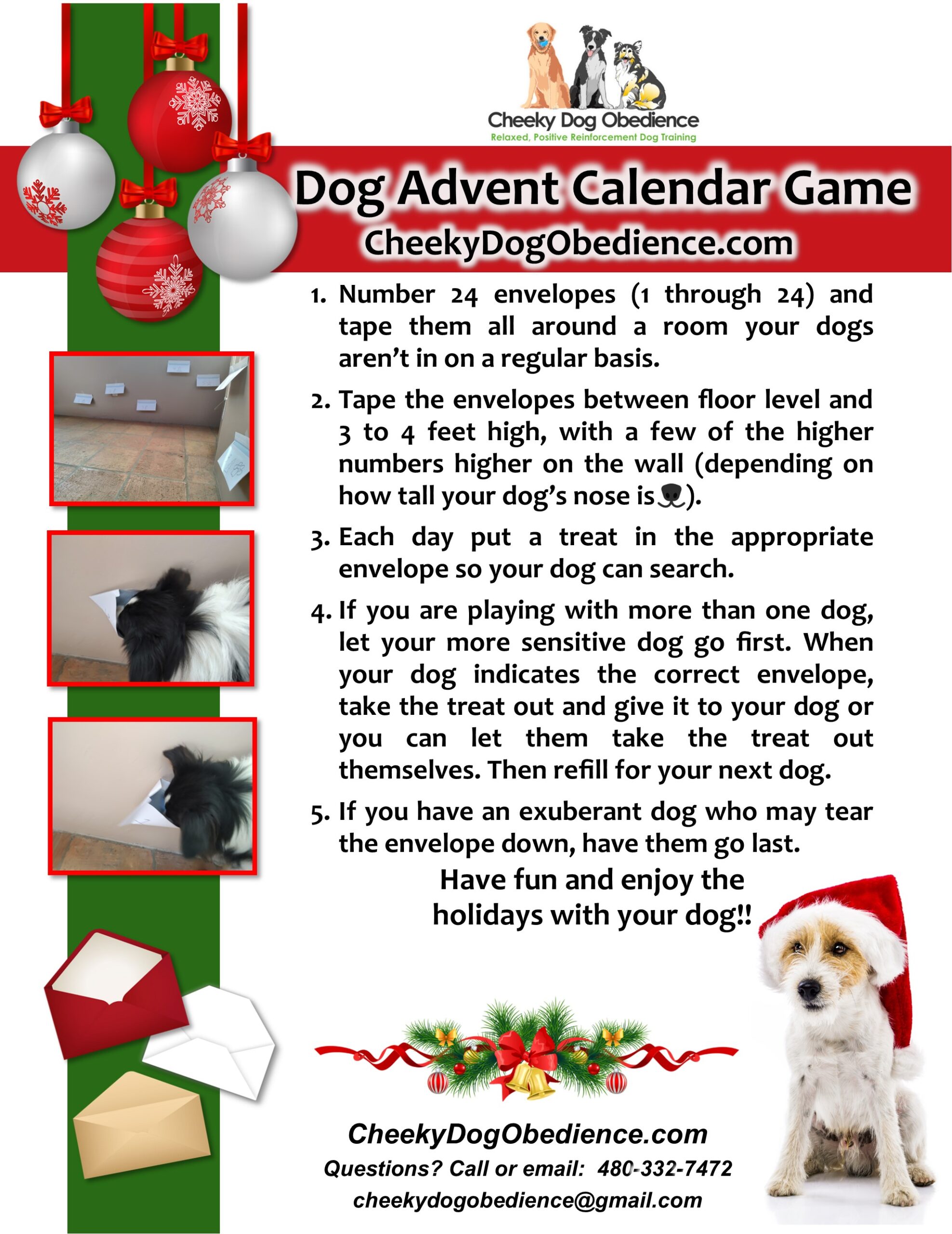
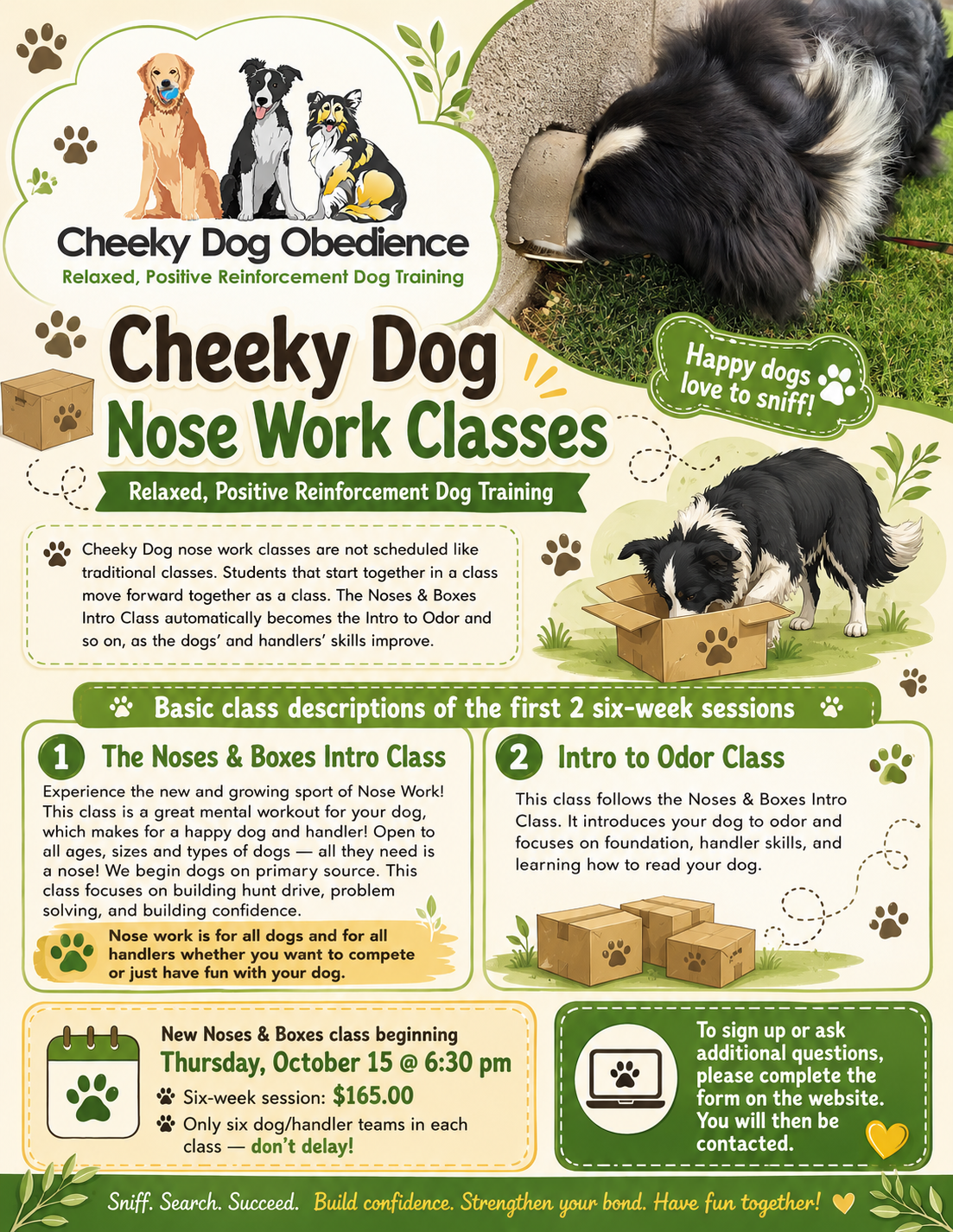
Cheeky Dog Nose Work classes are not scheduled like traditional classes. Students who begin together move forward together as a class. The Noses & Boxes Intro Class progresses into Intro to Odor and additional classes as the dogs’ and handlers’ skills improve.
Noses & Boxes Intro Class
Experience the fun and growing sport of Nose Work! This class provides a great mental workout for your dog and is open to dogs of all ages, sizes, and breeds — all they need is a nose!
Dogs begin working on primary source while developing important Nose Work skills. The class focuses on:
- Building hunt drive
- Problem solving
- Building confidence
- Strengthening teamwork between dog and handler
Nose Work is for all dogs and all handlers, whether you are interested in competing or simply want to have fun with your dog.
Intro to Odor Class
The Intro to Odor Class follows the Noses & Boxes Intro Class. Dogs are introduced to odor while handlers continue developing foundational skills and learning how to recognize and read their dog’s searching behavior.
New Noses & Boxes Class
Thursday, October 15 at 6:30 PM
Six-week session: $165
Class size is limited to only six dog/handler teams, so don’t delay!
To sign up or ask additional questions, please complete the form below. After submitting the form, you will be contacted with additional information.



 Fireworks Can Be Scary for Pets — But You Can Help!
 Tips to Help Your Dog During Fireworks
 Don't Take Your Pet to the Fireworks!